Table of contents
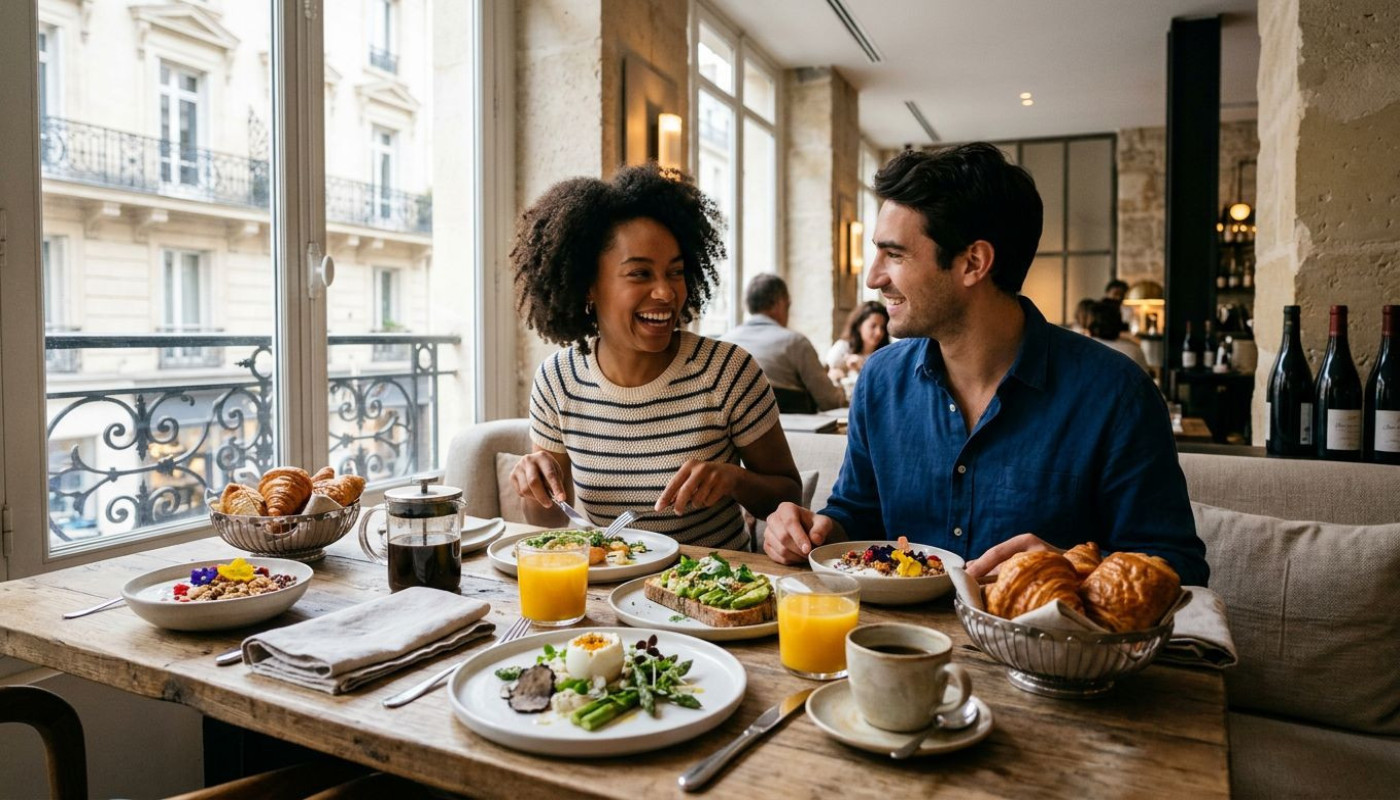
Breakfast is being rewritten in Paris, and not only by celebrity chefs or trendy cafés. In the 13th arrondissement, a district shaped by campuses, offices, and fast-changing food habits, hotels are quietly turning the morning meal into a real culinary moment, and a strategic one. At Hotel Urban Bivouac Paris, a 3-star address close to public transport, the breakfast table has become a lab for taste, rhythm, and urban practicality, reflecting how travelers now want to start their day: better, faster, and with meaning.
Paris mornings now come with expectations
Who still accepts a bland buffet? For years, hotel breakfast in big cities followed the same script, industrial pastries, anonymous scrambled eggs, and coffee that did its job without making an impression. But in Paris, where food is part of the city’s identity and where visitors increasingly compare every bite to what they can find around the corner, that old model is losing ground, and hotel operators know it. The shift is visible in market data: according to a 2024 report by Euromonitor International on global consumer foodservice, demand is rising for “premiumization” even in everyday categories, and breakfast is one of the most sensitive moments, because it sets the tone of the day and it is often the only meal included in the room price.
At the same time, travel itself has changed, and the morning routine with it. Business travelers want speed and consistency, families need options and reliability, and leisure guests, especially those taking short city breaks, want an experience worth posting and remembering. STR’s hospitality analytics have repeatedly highlighted how revenue management is no longer only about filling rooms, it is about maximizing ancillary revenue streams, and breakfast is among the most immediate levers. The logic is simple: when guests perceive value at 8 a.m., they are more likely to spend again at the hotel, extend their stay, and rate the property higher, which directly affects visibility on booking platforms.
Paris adds an extra layer: competition is not just among hotels, it is also against the city itself, and a neighborhood like the 13th offers everything from Asian bakeries to specialty coffee counters. For a hotel, the question becomes, why should guests eat inside when the street is so tempting? The emerging answer is not to imitate cafés, but to deliver what cafés cannot guarantee for travelers: predictable timing, a calmer environment, and a spread designed for different needs, all under one roof. In that sense, breakfast is becoming a service that sits between gastronomy and logistics, and the best hotels treat it accordingly.
A 3-star hotel, but ambitious plates
No, it is not fine dining. That is precisely the point. In the 3-star category, the challenge is to make breakfast feel deliberate without turning it into a luxury performance, and without pushing the price beyond what travelers will accept. Hotel Urban Bivouac Paris positions itself in that middle space, a hotel in Paris 13e that has built its identity around the idea of a modern “bivouac”, urban, functional, and comfortable, and that spirit translates into the breakfast approach. Instead of relying purely on volume, the aim is to bring freshness, balance, and choice, because guests now read breakfast as a signal of how the whole property is managed.
The culinary revolution, in practice, is often a series of small, careful decisions. More hotels are moving toward better bread and pastries sourced from local artisans rather than frozen supply chains, and they are adjusting the savory side to include options that fit today’s habits, lighter proteins, vegetables, and dairy alternatives. This is not just intuition; it mirrors what global industry trackers have been documenting. The International Food Information Council’s 2024 Food & Health Survey notes a steady focus among consumers on protein intake, sugar reduction, and ingredient transparency, and those expectations travel with them into hotels, especially in cities where health-conscious routines are part of daily life.
In a Paris context, it also means acknowledging diverse palates. The 13th arrondissement is one of the capital’s most multicultural areas, and guests passing through often come from a wide mix of countries and food cultures, sometimes looking for familiar anchors, sometimes eager for French staples. A strong breakfast proposition in this setting is not a single statement dish; it is an intelligent spread that can satisfy the early commuter, the jet-lagged tourist, and the family managing children’s preferences, all at the same time. The result is not flashy, it is quietly competitive, and that is where the revolution lies: the hotel breakfast is no longer an afterthought, it is part of the brand.
The 13th arrondissement sets the pace
Paris is not one city, it is many. The breakfast experience in the Marais, near luxury boutiques and crowded brunch queues, is not the same as in the 13th, where the day can start earlier and where mobility shapes everything. This district, stretching from Place d’Italie to the edges of the Seine and the newer developments around Bibliothèque François-Mitterrand, is a crossroads of students, researchers, medical staff, office workers, and travelers using it as a base to explore the capital without paying the premiums of more central postcodes. The morning here is about timing, and breakfast has to match that tempo, which changes the way hotels think about service.
In the 13th, proximity to public transport is not a nice extra, it is a core part of the promise. Guests choosing an address like Hotel Urban Bivouac Paris often do so because they want to move quickly across the city, connecting to metro lines and buses, reaching central Paris, major stations, or business hubs without stress. That reality influences the breakfast strategy: a hotel can offer the best croissant in the world, but if service is slow or the room is crowded and chaotic, the guest will remember the friction, not the flavor. The most effective setups understand flow, clear stations, good signage, and staff trained to keep the rhythm without rushing people.
The district’s geography also encourages a different kind of tourism. Travelers may be heading to a conference at Paris Expo Porte de Versailles, visiting friends at universities, catching a train from Gare d’Austerlitz, or exploring the street art and contemporary architecture that have become part of the area’s appeal. They often leave early, and they return late, which makes the first meal of the day even more consequential. The “culinary revolution” in hotels is therefore inseparable from urban reality: it is about giving guests a sense of control, and in a city as intense as Paris, that feeling can be more valuable than a dramatic menu.
Behind the buffet, a small operations war
Breakfast looks simple, until it is not. For hotel teams, the morning service is one of the most complex windows of the day: many guests arrive at the same time, expectations are high, and the margin for error is thin. Food waste is a constant issue, staffing is costly, and supply chains in a city like Paris are both rich and demanding. The United Nations Environment Programme has repeatedly warned, in its food waste assessments, that waste is a major sustainability challenge across the hospitality sector, and breakfast buffets are frequently cited as a pressure point, because abundance is part of the perceived value, yet abundance can quickly turn into waste.
This is where smarter models are emerging. Better forecasting based on occupancy, tighter replenishment strategies, and more modular displays allow hotels to keep the perception of generosity while limiting what ends up discarded. Some properties favor smaller batches and more frequent refills, others emphasize made-to-order elements to reduce leftovers, and many are rethinking packaging and single-use items as regulations tighten across Europe. None of this is glamorous, but it is the real engine of the modern breakfast experience, because guests notice freshness, and freshness is often the outcome of disciplined operations rather than extravagant spending.
For a 3-star hotel such as Hotel Urban Bivouac Paris, the operational balance is also a question of identity. Guests expect reliability, cleanliness, and comfort, and they increasingly expect responsibility, too. When breakfast is executed well, it signals that the hotel can handle details, which builds trust across the stay, from housekeeping to reception. When it is executed poorly, it becomes the moment that colors the entire review. In the era of platform ratings, where a small shift in average score can affect booking conversion, breakfast is no longer a side service, it is a reputational battleground, and Paris hotels are treating it as such.
How To Book And What To Budget
To experience breakfast on site, travelers can book directly with Hotel Urban Bivouac Paris or through major reservation platforms, then add breakfast during booking or at check-in. As a 3-star hotel in Paris 13e close to public transport, it suits short stays and business trips; budget varies by season, and visitors should also check eligibility for employer or conference-related travel support, which can offset accommodation costs.
On the same subject

How Local Events Shape Modern Immigration Policies
Should International Law Modernize To Keep Pace With Cybercrime Extradition?

Restoration of the 2015 Iran nuclear deal: Is it possible?

Why To Choose CNG Vehicles?
